





.jpeg)
Restaurants & Chefs
Over the course of the twentieth century, virtually every ambitious cook in the world learned the same language. In time the history of gastronomy shifted, and the whole thing began to come loose from several directions at once. Here are the books by the chefs and restaurants that left their own marks on that history, and several of them have stayed in print for more than fifty years. Others are harder to find than they once were, and the gaps on the shelf are therefore not always chosen.
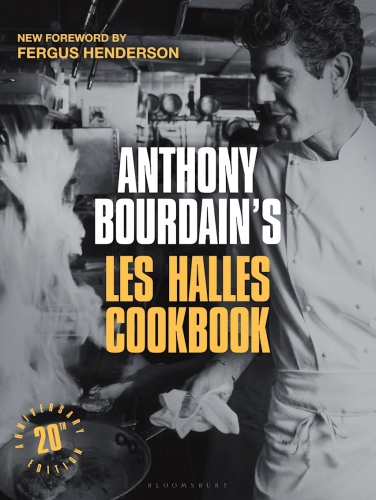
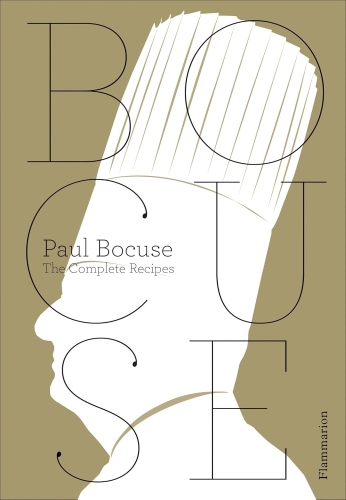
The common language of the twentieth century was French. Paul Bocuse learned the trade under Eugénie Brazier and Fernand Point, was awarded three stars in 1965 and held them for 55 years. Although he stood for a fresh wind with Nouvelle Cuisine, which modernised food as a concept, he also made the single strongest contribution of anyone to cementing France's dominion over what gastronomy essentially was and meant, for practically the rest of the century. To the point that the individual world championship for chefs is a competition he founded and that carries his name. Joël Robuchon codified the French craft and is the chef with the most accumulated Michelin stars in history. Naturally the record belongs to a Frenchman; anything else is barely even possible to imagine. Daniel Boulud is another French chef of stature, who grew up on a farm outside Lyon, went into apprenticeship at fourteen and worked his way through the kitchens of Roger Vergé, Georges Blanc and Michel Guérard before arriving in New York. But the hegemony did not only rule fine dining; it went further. When Simone Beck, Louisette Bertholle and Julia Child wrote Mastering the Art of French Cooking, it was not a book that taught the English-speaking world about French cooking. It was the book that taught an entire generation to cook at all. French gastronomy was the grammar, and anyone who did not have it did not count.
In the second half of the twentieth century the world changed. It did not only become more modern; it became smaller, and therefore more available. Science and currents of thought travelled faster, and gastronomy was not spared that development. The hierarchical French kitchen was challenged from several directions, and branches began to grow out of the thick trunk. One of those branches was perhaps more of a root, because it went looking for the soil. Alice Waters opened Chez Panisse in Berkeley in 1971 and in practice founded both Californian cooking and the whole farm-to-table idea: the notion of looking for your ingredients where you stand and letting the voice of nature carry all the way through to the plate. It was of course not invented there and then, since historically it was the only way to eat at all. In a modern, industrialised world it disappeared, and with availability the resources of your own surroundings became something you no longer had to take into account. The circle around Chez Panisse put proximity back on the agenda. Judy Rodgers came to France as an exchange student at sixteen and ended up with the Troisgros family in Roanne, living there for a year before she had any thought of working with food. She went on to cook at Chez Panisse and took over Zuni Café in San Francisco in 1987. Hers is the book a whole generation of American cooks holds highest. David Kinch belongs to the same branch. He opened Manresa in Los Gatos in 2002 and from 2007 worked with Love Apple Farms in the Santa Cruz Mountains, run by Cynthia Sandberg, who had left the law to grow things. Sean Brock brought the coal country of Virginia and an obsession with seed into South. Anyone who wants the full argument about agriculture will find Dan Barber's The Third Plate under Food History & Culture.
Another branch did not move away from the French but further into it. Those in this camp have kept developing and refining, and have long since broken through the limits the classical French kitchen reached. Thomas Keller bought The French Laundry in 1994 with money from 48 investors and built it on the principle that the first bite of anything is the best one. Daniel Humm and Will Guidara took over Eleven Madison Park in 2011 and took it from well regarded to three stars the following year and best in the world in 2017. What moved there was not only the food but the frame of reference for service, which can be read about in Unreasonable Hospitality. Clare Smyth opened Core in 2017 and held three stars by 2021. Joan Roca, who runs El Celler de Can Roca with his brothers, published the opposite of what a three-star chef usually publishes: a handbook of the fundamentals, explained across more than 2,000 photographs.
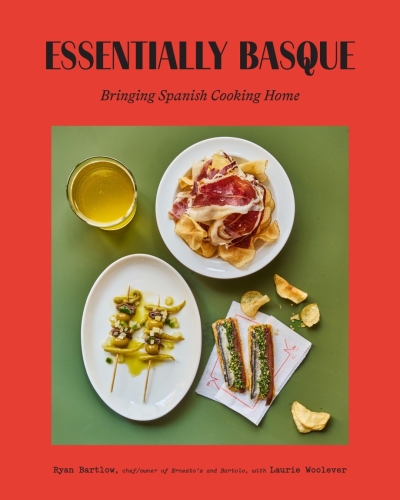
There is also a branch that grew impatient with the form and went to chemistry and to science. It began in the Basque Country. Arzak has stood in the same building in San Sebastián since 1897 and been run by the same family for four generations; when Juan Mari Arzak and a handful of Basque colleagues met the French nouvelle cuisine chefs in the seventies, they realised the same freedom could be applied to their own kitchen, and that became nueva cocina vasca. His daughter Elena is the fourth generation and runs the kitchen today. Then came elBulli: a cove on the Costa Brava reached by a dirt road, a place that had started as a mini-golf course and a beach bar, where Ferran Adrià arrived in 1984 as a 22-year-old garde manger and was head chef three years later. There, together with his brother Albert, he developed perhaps the most iconic restaurant that has ever existed, and time after time made the physically impossible possible. Grant Achatz had four years with Keller behind him when he opened Alinea in Chicago in 2005, known among other things for the edible balloon and for dishes served on a pillow that releases scent at every touch of the plate. Heston Blumenthal is English gastronomy's Leonardo da Vinci. Wylie Dufresne belongs here too, trained in both cooking and philosophy.
Another branch broke with France altogether and put place there instead. René Redzepi was twenty-five when he opened Noma in a warehouse on Christianshavn, and the 2010 book is not a recipe collection but an argument: one place, one season, one limit. At the same time there is enormous craft in it. Fäviken and Relæ each drew their own consequence from the same thought. Ana Roš shows what can be done in a valley on the Italian border where there are no suppliers to choose between. The network of foragers, cheesemakers and fishermen, the trout out of the river and the Tolminc from the mountain pastures are not a position but the precondition. Massimo Bottura made a comparable break from inside a tradition even more orthodox than the French one.
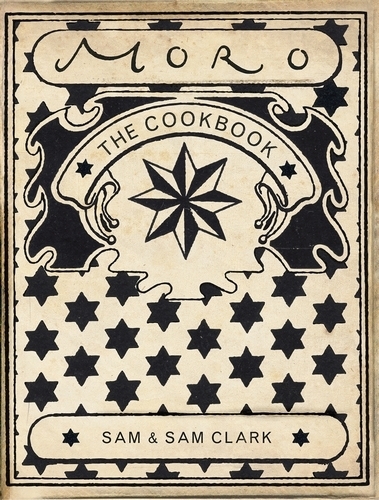
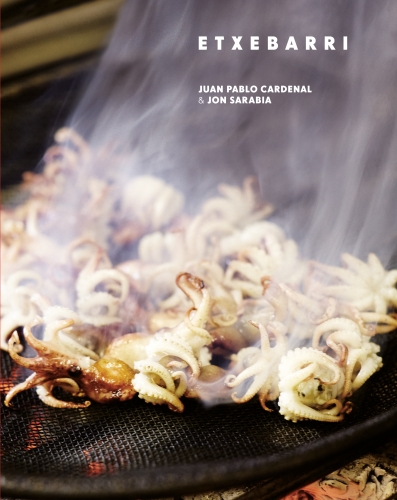
One branch simply went its own way. David Chang had worked at Jean-Georges and lived in Tokyo when he opened a twenty-seven-seat noodle bar in the East Village in 2004, and Momofuku became remarkable because nobody could place it. Rose Gray and Ruth Rogers cooked Italian food in London at the River Cafe without apologising for the fact that neither of them was Italian. It was in their kitchen that Samantha and Samuel Clark met, before driving a camper van from Spain through Morocco towards the Sahara for three months and opening Moro in 1997 on a Clerkenwell street nobody cared about. Fergus Henderson turned the entire hierarchy upside down at St. John. Central in Lima built a menu by altitude, with Pía León in the kitchen and a research operation, Mater Iniciativa, that Virgilio Martínez runs with his sister Malena, a trained doctor. Bittor Arginzoniz opened Etxebarri in a village of a few hundred people in the Basque Country. He has never been to cooking school, never staged in another kitchen, and does everything over fire on grills he built himself with pulleys.
Alongside these branches, and running across all of them, is the question of what a kitchen actually is. Dominique Crenn has never been to cooking school either. She grew up in Brittany, moved to San Francisco in 1988 and learned the craft on the floor in the kitchen at Stars under Jeremiah Tower, who had in turn been head chef at Chez Panisse. She comes in through the first branch's door and ends up somewhere else entirely. Atelier Crenn, opened in 2011, works backwards: the starting point is a memory or a feeling that is translated into food, and the menu is written as a poem in which every line is a dish. Crenn comes out of a tradition in which shouting and humiliation counted as the price of the job, and has built her kitchen as an explicit reaction against it. Nobody raises their voice. The point she presses is that the food is no worse for it. It is the only one of these changes you cannot see on the plate.
There are of course many more branches than these, and the categorisation is an outsider's view rather than any real gastronomic grouping. What can stand unchallenged is that the gastronomic map of the world, and what people imagine is possible, have been redrawn completely, thanks to all the extraordinary cooks who over the years have inspired, provoked and developed one another. A cook starting today has read all of them, seen all of them and had the chance to eat at all of them, and can take what they need from each: the soil's knowledge of the ingredient, the craft of the French school, the curiosity of the laboratory, the limits of place and the indifference to labels. That has never been possible before, simply because the branches had not finished growing. Ruth Reichl said something along these lines about Dan Barber's work and the importance of agriculture: that this is the first time an entire generation of working cooks starts from both the knowledge and the insight into what the raw material actually requires. It applies just as much to the rest. The evidence stands side by side on the shelf: Roca writes a beginner's book; Redzepi hands over the technique instead of the dishes in Noma 2.0, together with Mette Søberg and Junichi Takahashi; Roš and Etxebarri have never been near a cooking school and are at the top anyway. And it has meant that the standard of cooking at home is higher than it has ever been.
If you want to understand where it began, choose Bocuse or Boulud. If you want to see what happened when somebody grew impatient, choose elBulli or Alinea. If you want the best statement of why a place matters, choose Noma or Sun and Rain. And if you want to cook tonight from a book written by a world-class chef, choose Joan Roca or Moro.