







 30 DAYS OPEN PURCHASE
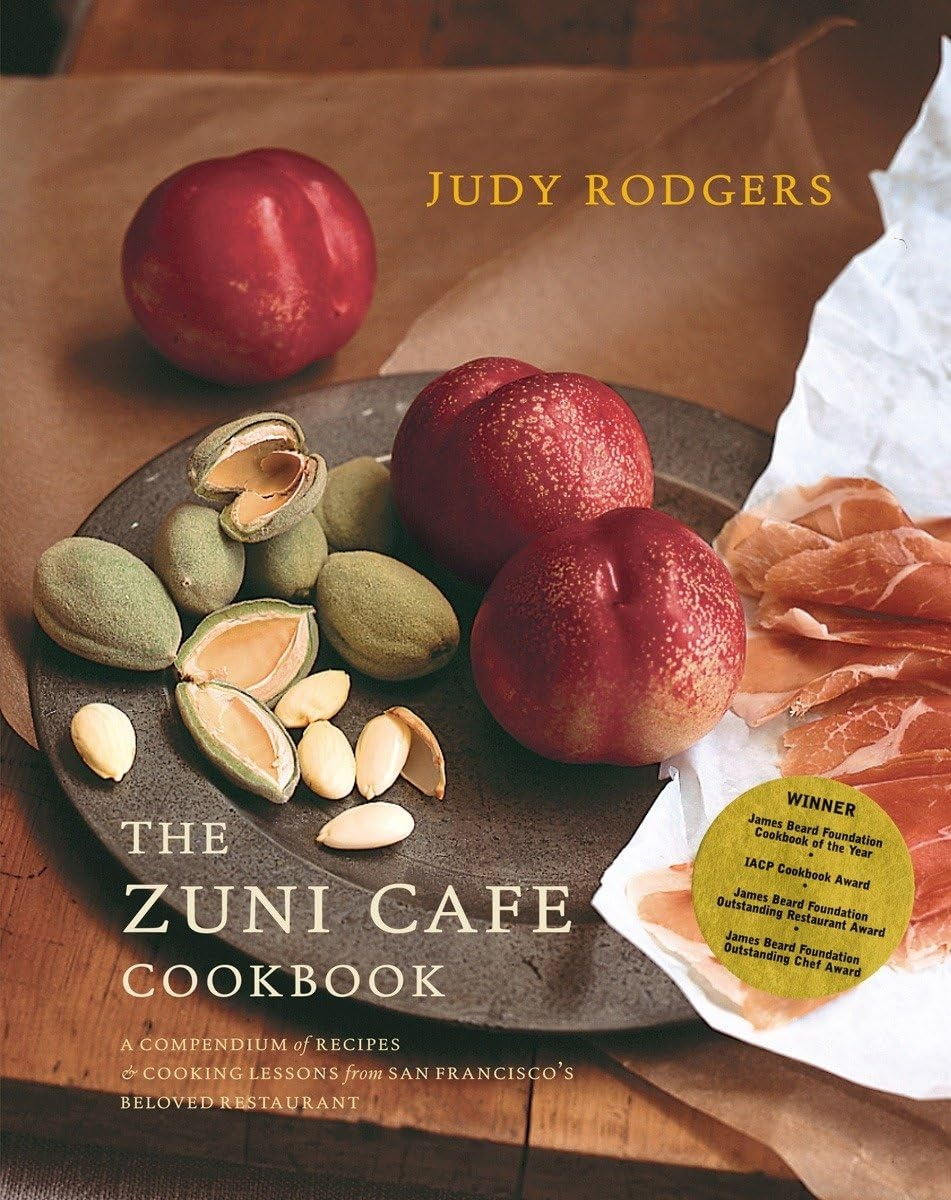
Judy Rodgers went to France as an exchange student at the age of sixteen and ended up with the Troisgros family in Roanne, who ran one of the world's most acclaimed restaurants. She lived there for a year before she had any thought of working with food. After returning home, she cooked at Chez Panisse and in 1987 took over Zuni Café in San Francisco, a neighbourhood restaurant on Market Street with a wood-fired oven and copper bar, which she ran until her death in 2013.
The book was published in 2002 and had taken her almost ten years to write. It shows. This is not a collection of dishes but a book about judgement, about how to tell when something is done. Instead of giving you minutes, she describes what to look for, smell and feel, and assumes that you are intelligent but lack experience. The recipes are long as a result, not because they are complicated but because she explains the reasons.
The best known is the roast chicken with bread salad, a dish Zuni served every day for 26 years. The recipe begins by salting the bird one to three days in advance, and it is largely from here that the habit of salting meat ahead of time spread into home kitchens.
It won the James Beard Award for Cookbook of the Year in 2003, was inducted into the James Beard Cookbook Hall of Fame in 2022 and is mentioned more often than almost any other when professional chefs are asked which book made them better cooks. The reason is simple: it teaches you how to cook rather than how to copy someone else's cooking.
Format: Hardback
Number of pages: 552
Language: English
First published: 2002
The Kitchen Lab Selection
A kitchen that serves the same dish every day for twenty-six years learns things that no amount of test-kitchen trials can uncover. The book was written out of that repetition rather than from a menu, and it shows.
It is mentioned more often by professional chefs than by home cooks, which is strange considering that it was written for home cooks. The obvious explanation is that it teaches precisely what a restaurant kitchen tends to skip over. Salting well in advance. Looking instead of timing. Understanding why a dish turned out well so that you can make it happen again.
It took her almost ten years to write. It can stand being read just as slowly. The recipes work as reading in their own right, not because she writes beautifully, but because she is constantly explaining the reasons behind what she does.