







 30 DAYS OPEN PURCHASE
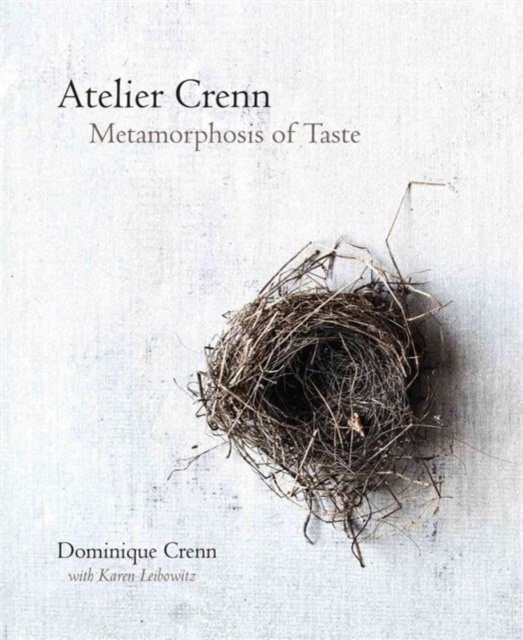
Atelier Crenn: Metamorphosis of Taste is Dominique Crenn’s first book and one of the few restaurant books in which the way the kitchen operates is described in as much detail as the dishes themselves.
Crenn was born in Versailles and grew up in Brittany as the adopted daughter of a politician and an artist who took her to restaurants from an early age. She never attended culinary school. When she moved to San Francisco in 1988, she found work in the kitchen at Stars under Jeremiah Tower and learnt the craft on the job. She later became executive chef at a hotel in Jakarta, the first woman in Indonesia to hold that position, before returning to California and opening Atelier Crenn in 2011.
The restaurant received two Michelin stars the following year, making Crenn the first female chef in the United States to achieve the distinction. The third star followed in 2018, again making her the first woman in the country to do so.
The menu at Atelier Crenn is written as a poem. Each line corresponds to a dish, and guests receive the poem instead of a description of what is on the plate. It sounds like a gimmick, but it is not, because the entire working method begins with a memory or a feeling that is then translated into food, rather than the other way round. The book follows that process and shows how a line becomes a dish.
The most interesting section, however, is about how the kitchen is run. Crenn comes from a tradition in which shouting, humiliation and twelve hour shifts without a break were regarded as the price of the profession, and she has built Atelier Crenn as a deliberate reaction against it. Nobody raises their voice. New employees are not subjected to the rituals that were long the norm in French brigade kitchens. The kitchen is open to women and LGBTQ+ people in a way that remains unusual in the fine dining world, and Crenn has been one of the industry’s most outspoken voices on harassment and abuse of power.
Her argument is that the result is not worse for it, but better. A kitchen where staff stay for several years develops a level of precision that a kitchen with constant turnover never has time to achieve. Three Michelin stars are difficult evidence to argue with.
Since the book was published, Crenn has removed all meat from the menu and now serves only vegetables and seafood, partly for climate reasons and partly on animal welfare grounds. She also runs Bleu Belle Farm in Sonoma, which supplies the restaurant with ingredients. She also appears in the second season of Chef's Table.
The book is lavishly photographed and is as much a work of art as a cookbook. The recipes are at restaurant level and most people will never cook from it. That is not really the point either. This is a book to read in order to understand how one of the most distinctive chefs of our time thinks, and how a kitchen can be run without breaking the people who work in it.
Number of pages: 376
Co author: Karen Leibowitz
ISBN: 9780544444676
Language: English
First published: November 2015
The Kitchen Lab Selection
Crenn's approach of beginning with the sensory experience and only then placing the components into the dish gives gastronomy a distinctly spiritual dimension. She is the first female chef in the United States to earn three Michelin stars, and she never went to culinary school. She has also built her kitchen as an explicit reaction against the old restaurant tradition of shouting and humiliation. Throughout the major change the industry has undergone in recent years, she has been one of its clearest voices on the issue.
Practically every other restaurant book documents the plates and leaves the working conditions unspoken, allowing the reader to assume that they were simply the price paid for the result. Crenn's argument, moreover, is technical rather than moral. A kitchen where people stay for several years develops a precision that a kitchen with constant staff turnover never has time to achieve. It is an uncomfortable proposition for an industry that long took for granted that harshness was the method itself.