








 30 DAYS OPEN PURCHASE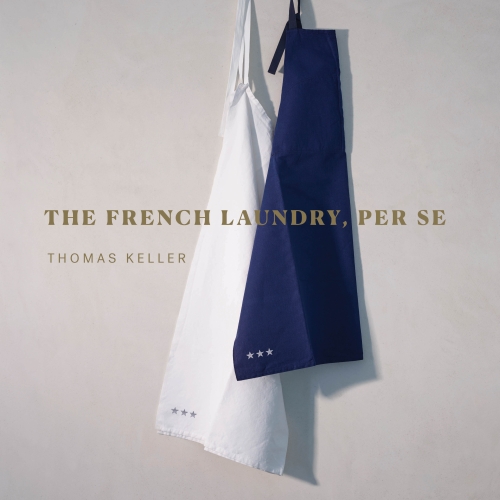
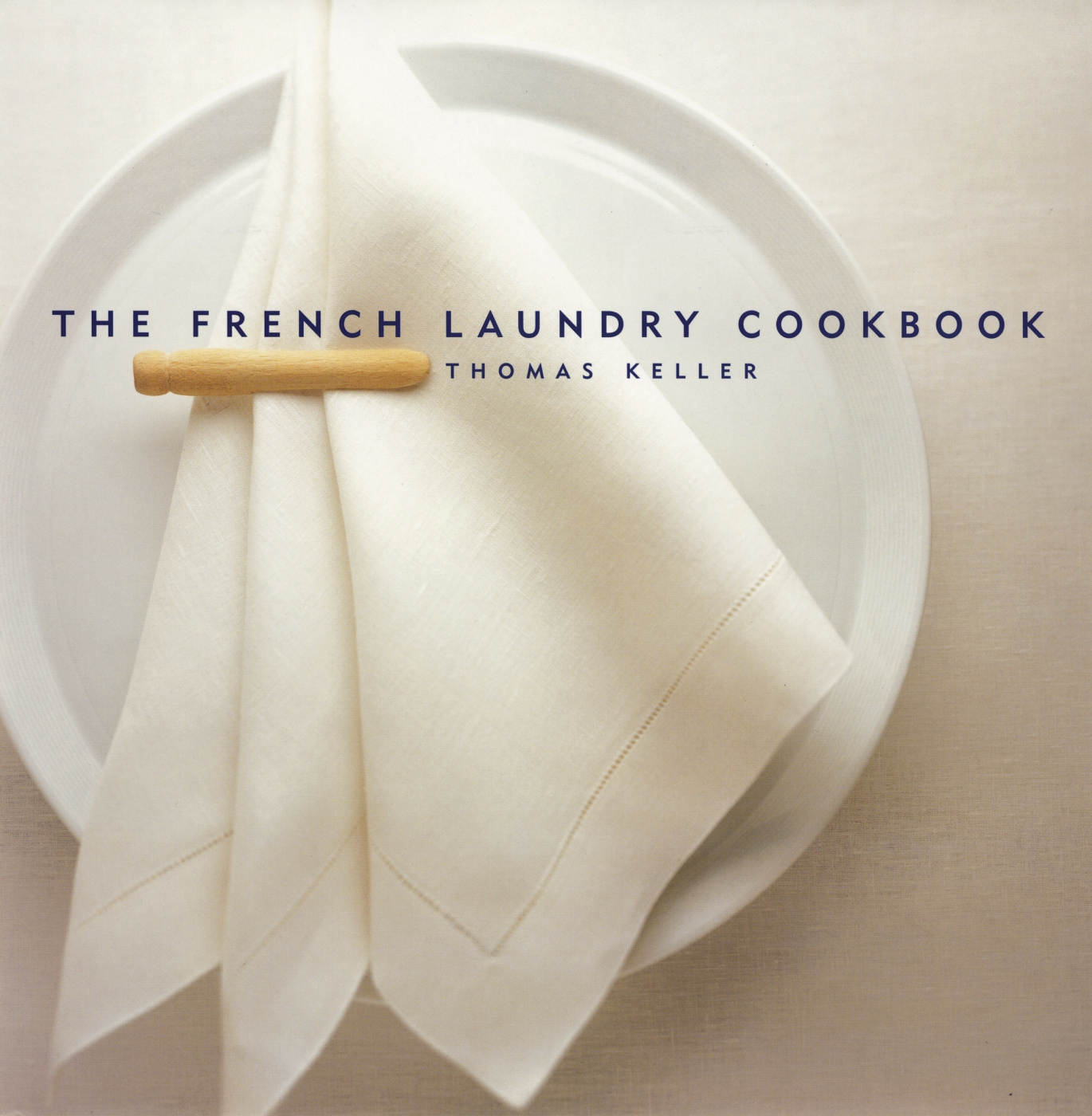
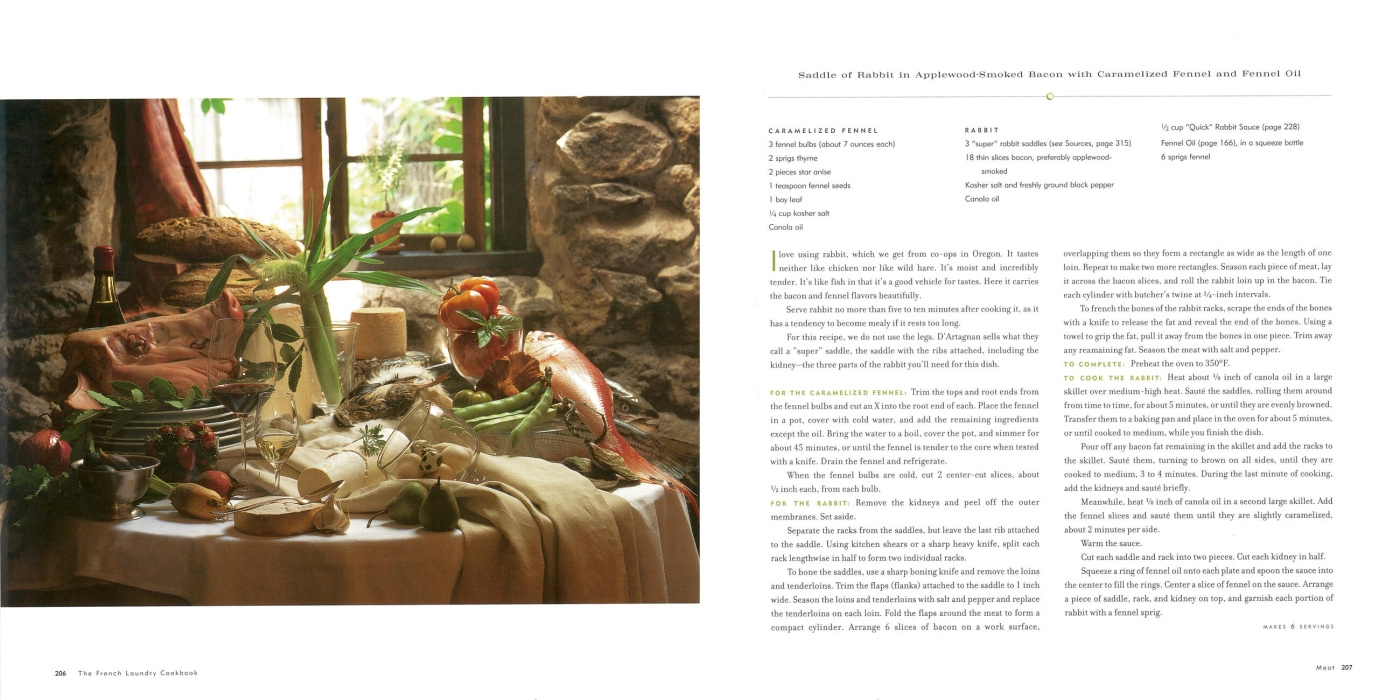
The French Laundry is in Yountville in Napa Valley, in a stone building that was once, quite literally, a French steam laundry. Thomas Keller bought the place in 1994 after raising the money from 48 investors.
The restaurant is built around a simple principle: the first bite of something is the best. Portions are therefore small, courses are numerous and no ingredient is repeated during a menu. That is the entire logic behind the American tasting-menu format that subsequently spread elsewhere.
The food is also less solemn than its reputation might suggest. The first course is a Salmon Cornet, a small cone that looks like an ice cream cone but contains salmon tartare. Dessert might be called Coffee and Doughnuts. In between comes Oysters and Pearls, a sabayon of pearl tapioca with oysters and caviar, Keller's most famous dish.
The book codified a level of precision that simply did not exist in American cooking before Keller put it down on paper. It is as much a manifesto as a collection of recipes, which is a polite way of saying that no living person has cooked their way through the whole thing.
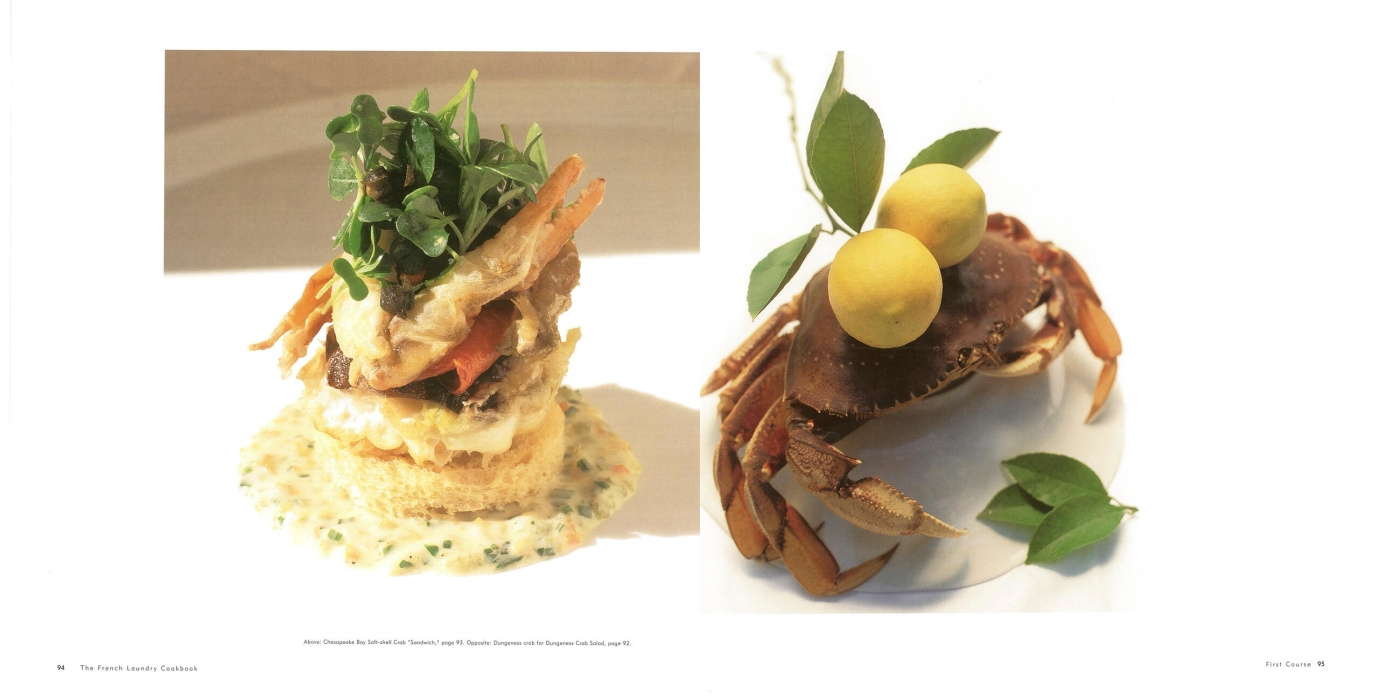
Nor is that really the point. You buy it for much the same reason you buy a dictionary you never look anything up in, only with considerably better photographs.
Format: Hardback
Number of pages: 336
Language: English
First published: 1999
The Kitchen Lab Selection
The French Laundry made American fine dining take itself seriously, and every ambitious American restaurant book since has been measured against it. It established what a restaurant book should look like, right down to its format, weight and tone. Thomas Keller is also one of the most respected chefs in the profession and a genuine chef's idol. He never went to culinary school, learnt in kitchens and initially failed with a restaurant of his own in New York. What he built afterwards was not a style but a standard: the idea that skill is not inspiration, but the ability to do exactly the same thing equally well every night for twenty years without a single guest noticing how difficult it is. To some, that may be a slightly dull idea, but it is an utterly uncompromising one, and it runs through every instruction in the book. Whatever else you might say, Keller can cook. He has run two separate three-Michelin-starred restaurants, Per Se and The French Laundry, and maintained those six stars without interruption for twenty years. It is worth adding that both have held three stars since the Michelin Guide first visited New York in 2005 and the San Francisco Bay Area in 2006 respectively to award stars, and that The French Laundry had already been regarded as the best restaurant in the United States for several years. That requires precisely the focus, precision and extreme quality of execution for which Keller is also idolised. The French Laundry has also produced chefs such as Grant Achatz, who later earned three stars at his own restaurant Alinea, and Corey Lee, whose restaurant Benu has consistently held three stars since the 2015 guide.