





Japan
The basic form of a Japanese meal is called ichijū-sansai: one soup and three dishes, plus rice and something pickled. It is not a menu but a form, and it already says most of what there is to say about how this cooking thinks, because the three dishes are distinguished by what has been done to them rather than by what they are made of. One raw, one simmered, one grilled. Out of that form comes most of what has become known outside Japan: sashimi and sushi, tempura, yakitori, nabe, tsukemono, miso soup, soba and udon, ramen and donburi.
Underneath all of it lies dashi. It takes ten minutes and contains two things, kombu and katsuobushi. It was in that very broth that the chemist Kikunae Ikeda at Tokyo Imperial University isolated glutamic acid in 1908 and gave the fifth basic taste a name. Umami did not arrive as an idea, then, but as an explanation of why Japanese broth tastes the way it does.
This cooking is also less closed than its reputation suggests. Tempura arrived with the Portuguese in the sixteenth century, ramen and gyoza from China, tonkatsu and Japanese curry from the West during the Meiji era. And sushi began as narezushi, a preservation method in which freshwater fish was lacto-fermented in salt and rice, after which the rice was thrown away. Only much later, in Edo in the 1820s, did it become the hand-formed nigiri that turned the thing into street food. Japanese cooking has never been shut. It has taken in and remade, and it has been doing so for a long time.
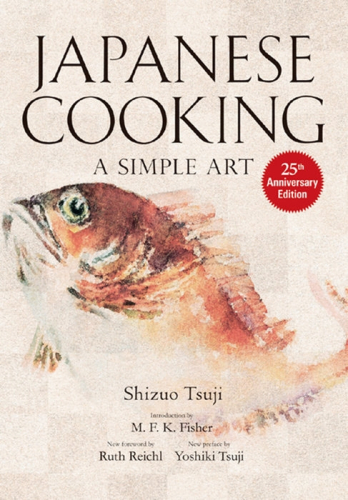
One of the most important records of Japanese cooking comes from Shizuo Tsuji. He was a journalist before he married into a family that ran a cooking school in Osaka, took it over in 1960 and built it into Japan's largest and most influential, with thousands of students a year. He was at the same time a francophile: trained in France, a close friend of Paul Bocuse and the Troisgros brothers, and the man who did more than anyone to bring French cooking to Japan. The man who explained Japanese cooking to the West was the same man who explained French cooking to Japan. The traffic ran both ways, and it ran through one person.
Japanese Cooking: A Simple Art appeared in 1980 with a foreword by M.F.K. Fisher, and forty-five years later nobody has needed to redo the work. The book does not begin with recipes. It begins with ingredients, tools and technique, and dashi is treated as the foundation everything else rests on, with pages on kombu and katsuobushi before a single dish is presented. That says something about how this cooking is ordered. Italian cooking is organised by region and French by hierarchy. Japanese is organised by method.
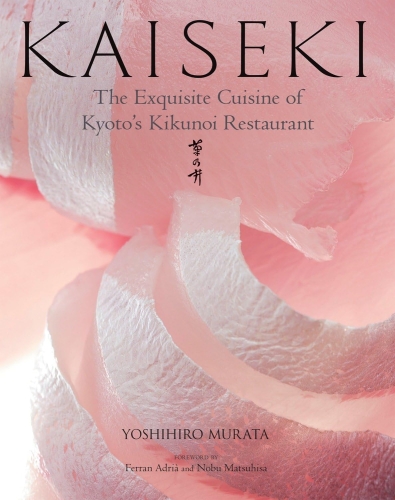
Kaiseki is the pure case. The word means roughly stone in the lap and comes from Zen monks who held warm stones against their stomachs to bear the hunger of fasting. What governs the meal is not the ingredient but the preparation: every dish represents a method, one raw, one simmered, one grilled, one steamed, one soured, and they come in a fixed order. Everything else follows the season, and not only the food but the ceramics, the garnish and the room. Season also means something else there. The traditional calendar divides the year into 24 periods and beyond that into 72 micro-seasons of roughly five days each, and the meal answers to that division. Yoshihiro Murata, third-generation owner of Kikunoi in Kyoto, documents it season by season and dish by dish. He also led the work that got Japanese cuisine onto the Unesco list of intangible cultural heritage in 2013.
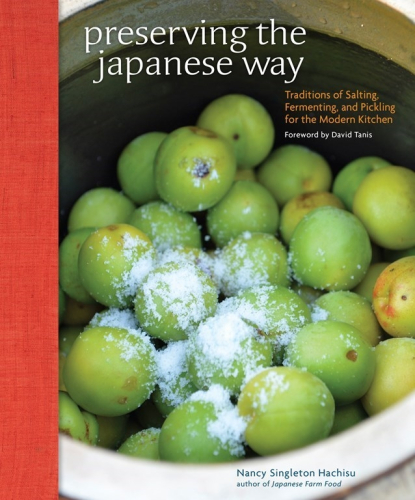
The same logic governs preserving, and there Japan has gone further than anyone. Nancy Singleton Hachisu moved there in 1988 for what was meant to be a year, married a farmer in Saitama and still lives on the farm. Preserving the Japanese Way is therefore written from inside a household that salts, dries and pickles because that is how the year works.
At the centre of the book stands nukadoko. Nuka is raw rice bran, what is left when rice is polished, and it is mixed with salt and water into a damp bed that ferments. In it you bury vegetables: cucumber, daikon, carrot, swede. After a few hours to a day you lift them out as nukazuke, sour and salty but still crisp, and eat them with the rice. The bed is turned by hand every day and fed with fresh nuka as it goes, and an old idea holds that the household's own bacteria thereby become part of it. Looked after, it can live for decades and be inherited across generations. Its closest western relative is the sourdough starter: a living culture kept alive by feeding on a schedule, which becomes this particular household's, and which dies if somebody forgets about it. The difference is that the sourdough gives you a loaf while the nukadoko gives you a shelf of side dishes, and that few starters are a hundred years old. It is not a recipe but a method that outlives the person performing it.
And the method travels. Koji Alchemy is about a single mould, Aspergillus oryzae, which lies behind sake, miso, soy sauce, mirin and amazake, and which was named Japan's national fungus in 2006. It is what Noma went and got when the kitchen built its fermentation lab, and the guide that came out of that work can be read as a Nordic book but is every bit as much a Japanese one. The traffic from Tsuji's day has not stopped. It has simply changed direction again.
Leaf Tea belongs in the same argument even though it sits under Drinks. Timothy d'Offay founded Postcard Teas in London and buys directly from small gardens, and the book's first insight is the one most people miss: the water decides more than the tea. Green tea is damaged by boiling water while black tea requires it, and the difference between 70 and 90 degrees is the difference between sweet and astringent. The same leaf, two drinks. Method again.
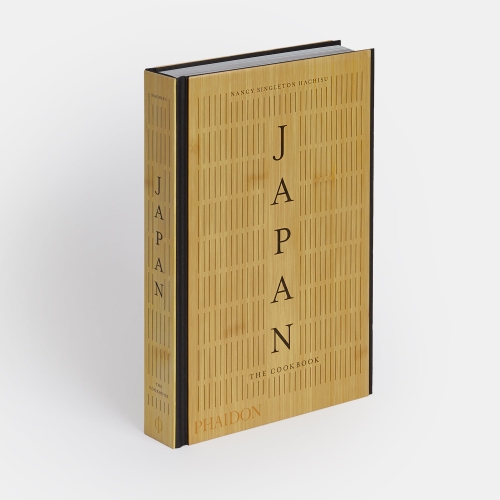
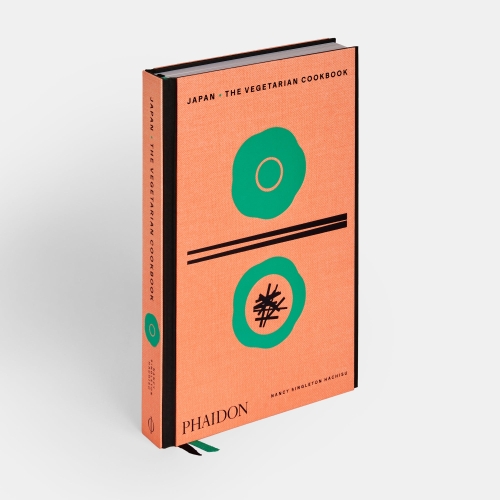
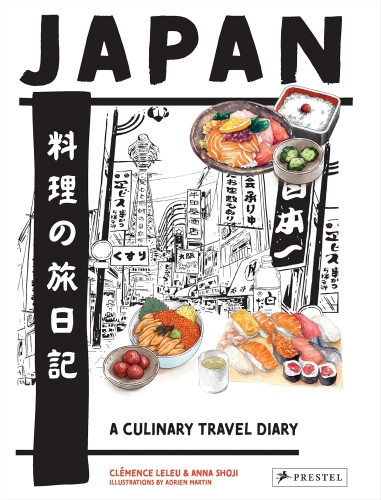
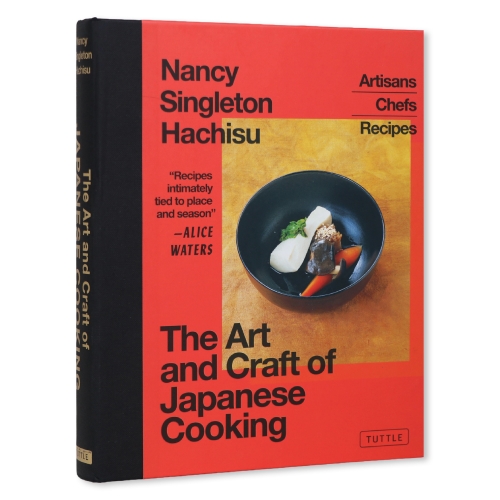
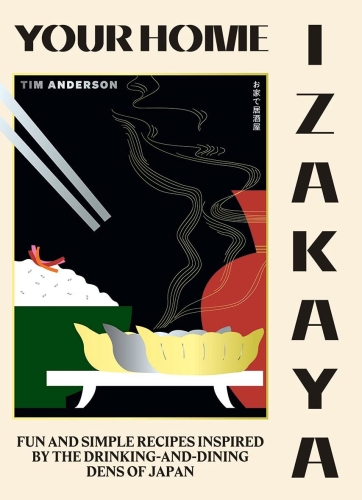
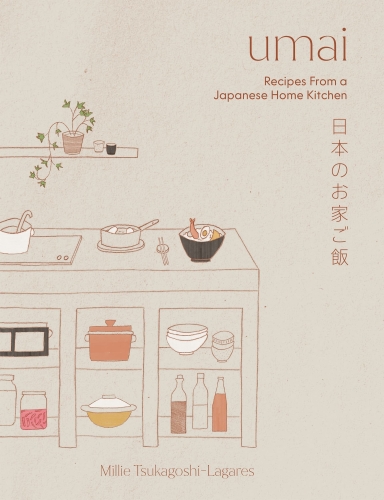
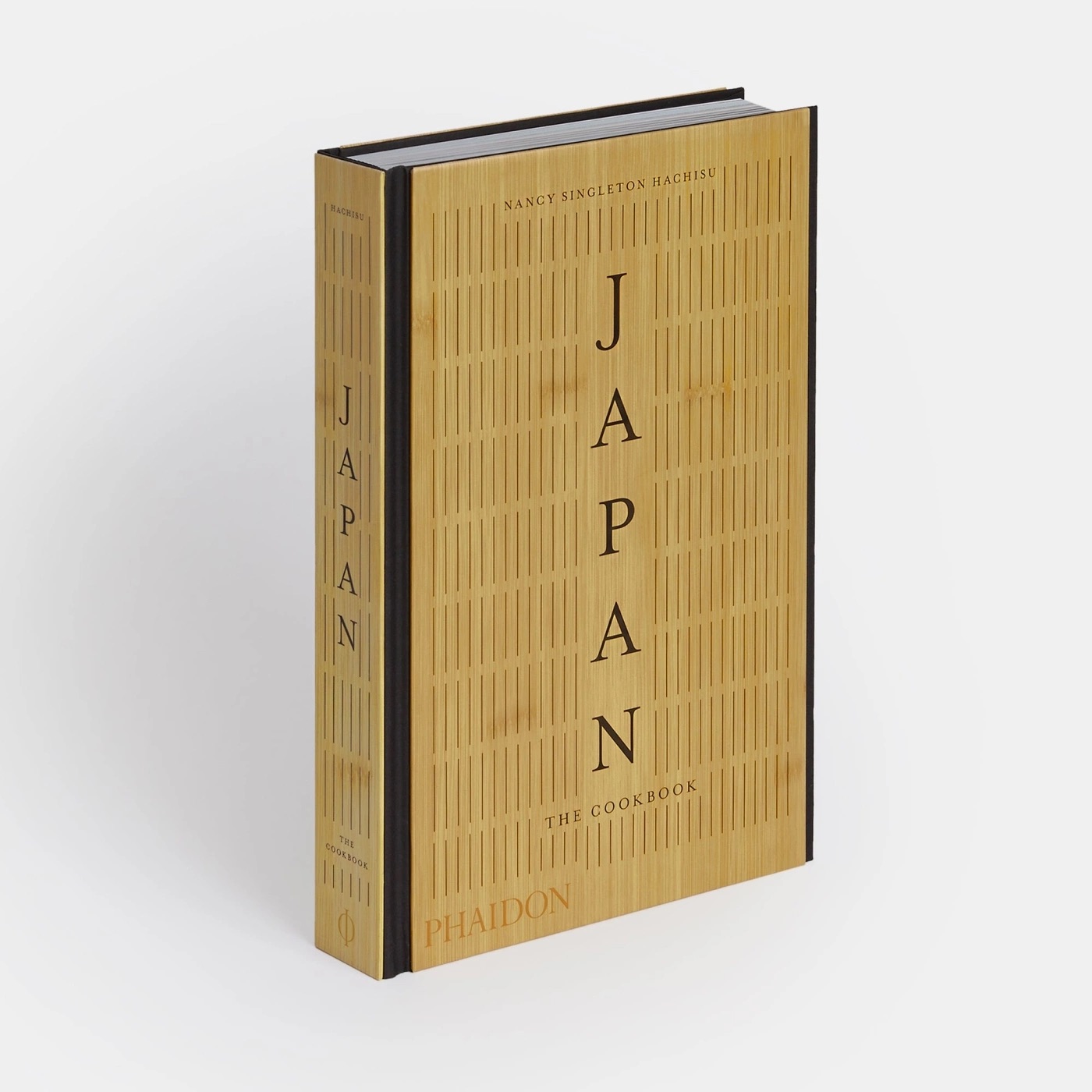
The rest of the section is broader than that. Japan: The Cookbook holds more than 400 recipes arranged by the progress of the meal, and the vegetarian companion volume more than 250, which makes sense because Japanese cooking is vegetable-driven at its core. The Art and Craft of Japanese Cooking is not about cooking but about the people who make the ingredients: soy brewers, miso makers, tofu producers and fishermen. For the home kitchen there is Tim Anderson's Your Home Izakaya and Millie Tsukagoshi Lagares's Umai from a small kitchen in Tokyo. Japan - A Culinary Travel Diary takes it region by region instead, from Tokyo and Kansai to Kyushu, Hokkaido and Okinawa.
One section of Tsuji has not aged at all, and that is the one on knives and cutting technique. It is still the best that has been written on the subject in English, and that is no accident. In a kitchen where method is what counts, the edge is not an accessory but part of the recipe. A sashimi is a cut, not a preparation. Follow that thread further and it does not end at the bookshelf but at the santoku knives, the sashimi knives and knife care.
If you are only going to have one book, take Tsuji. If you want to see how far a meal can be pushed, take Kaiseki. If you want to cook tonight, take Umai.