







 30 DAYS OPEN PURCHASE
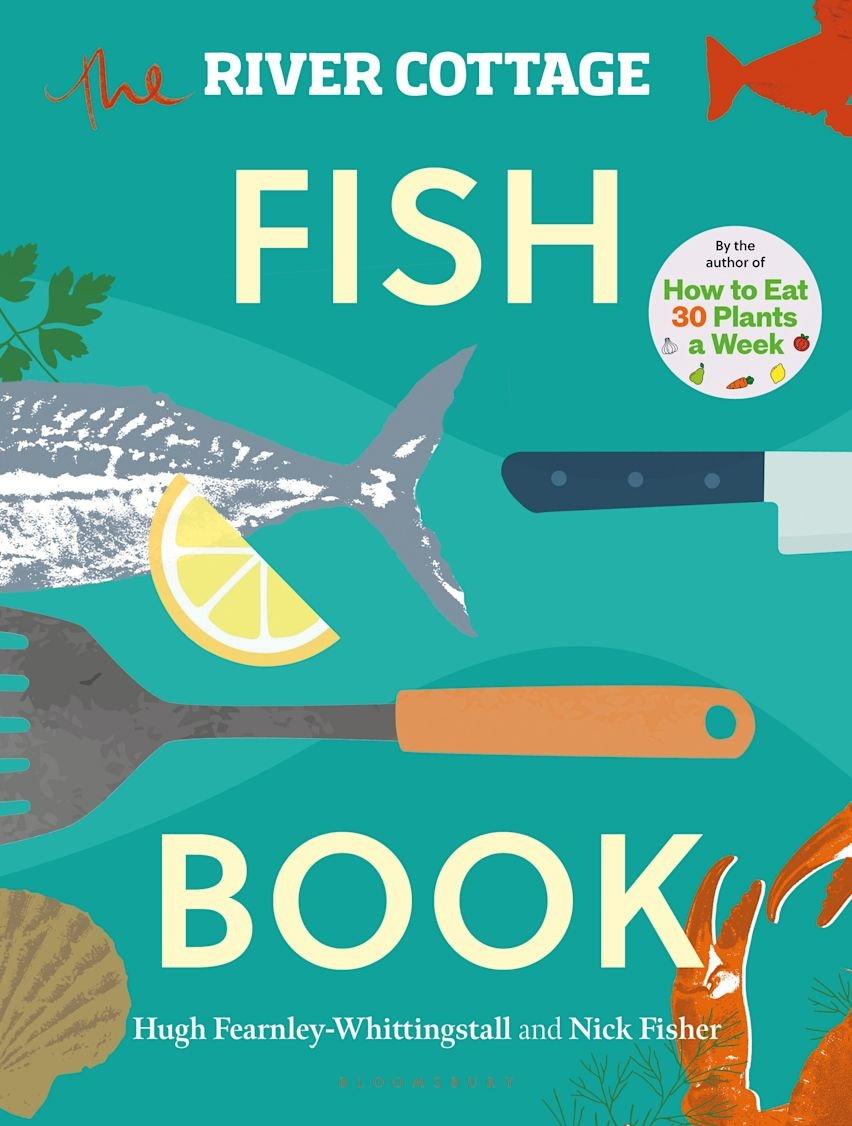
The River Cottage Fish Book begins long before the kitchen, and that is precisely why it is irreplaceable.
Hugh Fearnley-Whittingstall and fish writer Nick Fisher devote the first half of the book to questions most cookbooks skip entirely. Where fish comes from. The difference between farmed and wild caught fish and what each actually means. Quotas, bycatch and why historically a third of what was caught was thrown back dead. How to recognise fresh fish at the counter, what to ask the fishmonger, and how to look after it once you get home.
It also covers catching fish in its own right, including angling and coastal fishing, as well as how to gather mussels and shellfish yourself without poisoning yourself.
The core of the book is the species guide. Fish by fish, covering what it is, when it is in season, how the stock is doing and how it is best cooked. That is what makes the book a reference work rather than simply a collection of recipes.
The work also had real consequences. Fearnley-Whittingstall's campaigning against EU discard rules grew out of the same commitment and helped bring about changes to the Common Fisheries Policy.
The perspective is British, but for northern European waters it travels remarkably well. The North Sea and neighbouring waters are shared ecosystems, so cod, mackerel, herring, plaice, sole, crab and mussels are all highly relevant. More local conditions, particularly those of the Baltic, Norwegian coast or Mediterranean, depending on where you live, naturally require some additional knowledge.
The second half consists of recipes organised by method. Poaching, frying, grilling, smoking, salting and stewing, along with a section on what to do with the parts most people throw away.
Six hundred and eight pages, and the only book that treats fish as a question of responsibility before it becomes a question of cooking.
Format: Hardback
Number of pages: 608
Publisher: Bloomsbury
ISBN: 9781408832912
Language: English
First published: 2007, this edition: 2012