







 30 DAYS OPEN PURCHASE
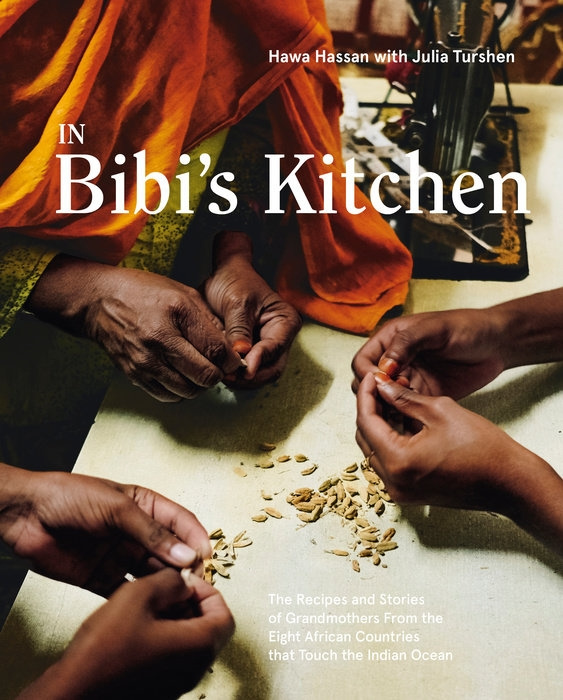
Hawa Hassan was born in Mogadishu and fled the civil war as a child. Her family ended up in a refugee camp in Kenya, and when she was seven her mother put her alone on a plane to Seattle to give her a chance. It was 15 years before they saw each other again.
She grew up in the United States, worked as a model and later founded Basbaas, a company making Somali sauces and chutneys. That was her route into food, and it is where this book comes from.
Bibi means grandmother in Swahili. Together with Julia Turshen, Hassan sought out eight women along the east coast of Africa, interviewed them and wrote down their recipes. Each country gets an introduction, each woman a portrait and a conversation, followed by her food. The photographs are by Kenyan photographer Khadija Farah.
The food is coastal: coconut, rice, acidity and spices, with fish and seafood, stews and breads. Somali suqaar, Zanzibari pilau, chapati, sambusa and Eritrean injera with berbere. These are home-cooking recipes and they are written as such, straight to the point and without the detours of restaurant cooking.
The book won a James Beard Award.
Format: Hardback
Number of pages: 288
Language: English
First published: 2020
The Kitchen Lab Selection
Hawa Hassan and Julia Turshen followed Africa's Indian Ocean coast and gathered recipes from grandmothers in eight countries, from Eritrea and Somalia down to South Africa and out to Madagascar and the Comoros.
It is an unusual line to draw. The coast is a trading world of its own, where rice, coconut and Arab and Indian influences have moved along it for centuries, and the national borders that divide the region have little to do with how the food has actually travelled.
In Italy the nonna is the highest authority and nobody questions it. The difference is that African cooking has never been given the same documentation, and this book is the closest thing there is.
The conversations are moreover about migration, war and exile as much as about food, because for most of these women they are the same thing. The recipes are not written down anywhere else. They have existed in someone's head, and now they do not only do that.