

 30 DAYS OPEN PURCHASE
A croissant is built from 27 layers of puff pastry (traditional method). That's not an approximate number, it's the result of three butter turns, and each layer is thinner than a millimetre. That structure, which is why a good example sounds like parchment and falls apart in a way that requires napkins in quantity, the plate nearby and sometimes a change of clothes, is also what makes it difficult to cut with a regular bread knife without crumbling it. The teeth of the knife catch on the outermost layers and drag them along with each movement. The result is a divided pastry with one side that looks like a renovation project and an interior compressed to half its original volume.
An ultrasonic knife divides a croissant in a completely different way. The blade vibrates with up to 60,000 movements per second, an amplitude range that is invisible to the naked eye but sufficient to eliminate friction against the layers instead of breaking them apart. The blade passes straight through the butter layer without pulling at it, without compressing the air pockets and without crushing the caramelised exterior. The divided croissant you lift up is identical to the original, but divided in half and with a cross-section that shows exactly how technically competent your local baker is.
It's precisely that cut which is the reason why this knife has found a clear niche in food photography and food styling. A perfectly halved croissant, cut with a clean cut along its entire length, shows the honeycomb structure inside. No compression, no torn layers, no crumbs on the board. It's an image that no longer requires ten failed attempts and as many baked pastries. The same applies to a cross-section of a sourdough loaf or baguette that should show the irregular air structure with intact cavities, or a cut of a bread where every slice should be identical to the previous one and the crumb shouldn't be compressed along the cut surface. The requirement for an instrument that doesn't destroy what it's supposed to depict is the same as the requirement for an instrument in an operating microscope. In other words, the knife helps you divide pastries with a perfect result instead of them being usable as training material in a beginner's course in forensics.
For bakeries, the argument is different, more operational. Crumbs are not just aesthetically problematic, they're economic. Every kilo of bread that falls away during cutting is production time and raw material cost that ends up on the floor. An ultrasonic knife dramatically reduces crumb production, which means more of the bread stays together and the work surface requires considerably less maintenance during service. The consistency of slice thickness also increases, not because the knife is programmed for it but because the lower resistance makes it easier to maintain an even movement without having to compensate for lag in the material. The result is a cut with control, whether it concerns a hard sourdough loaf with a thick crust, a soft brioche with a tender crumb or a scalded sandwich loaf that otherwise sticks to a regular blade.
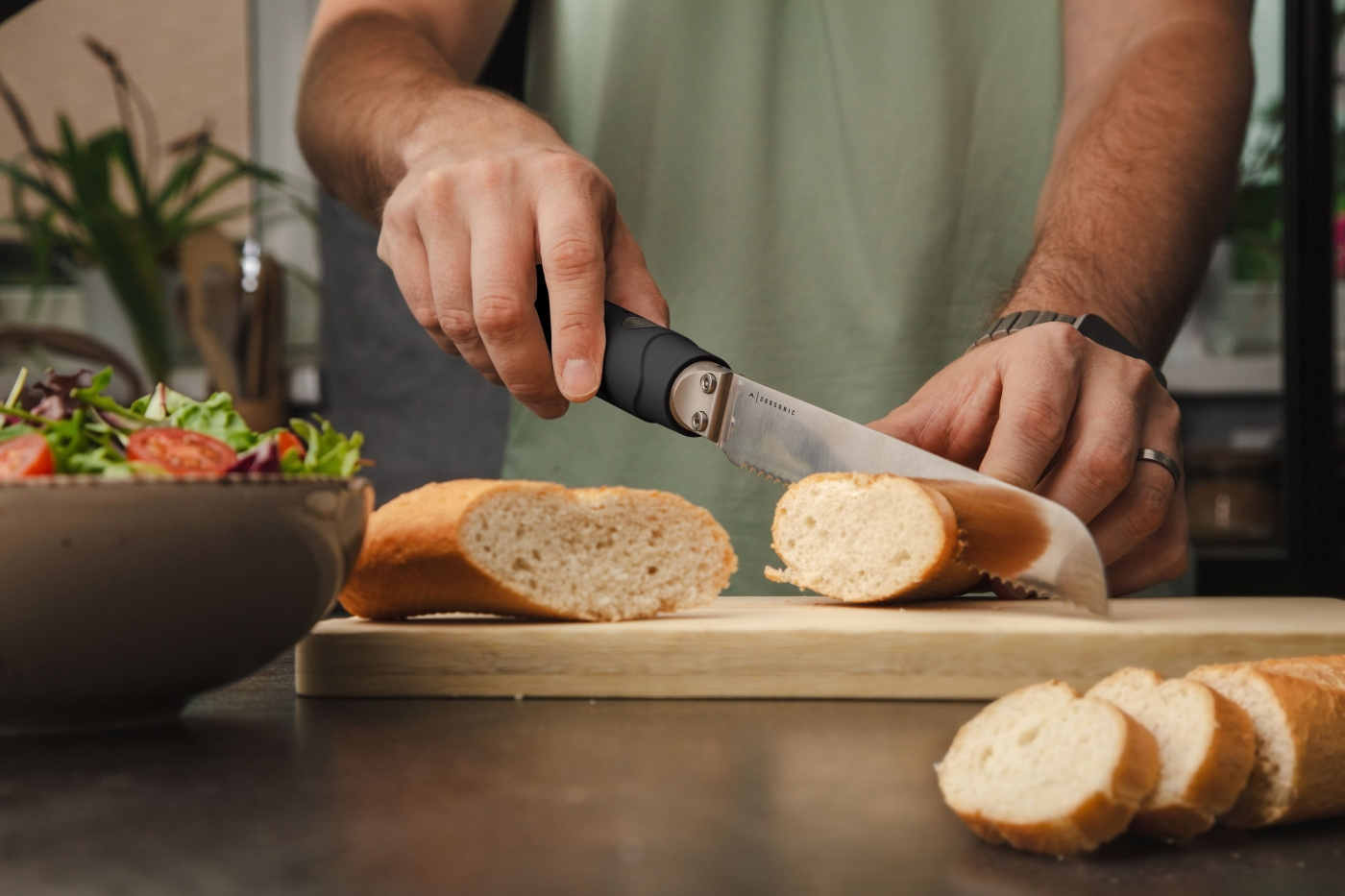
Fresh bread is difficult to cut with a conventional blade for one reason: it's soft enough to be compressed under pressure. The crust offers resistance and the crumb gives way, and when you're halfway through a freshly baked loaf you're also halfway through crushing what you baked. The ultrasonic blade passes through the crust with minimal force and continues without compression through the rest. The result is a slice that retains its shape, its thickness and its airy internal structure, whether the bread came out of the oven ten minutes or three hours ago.
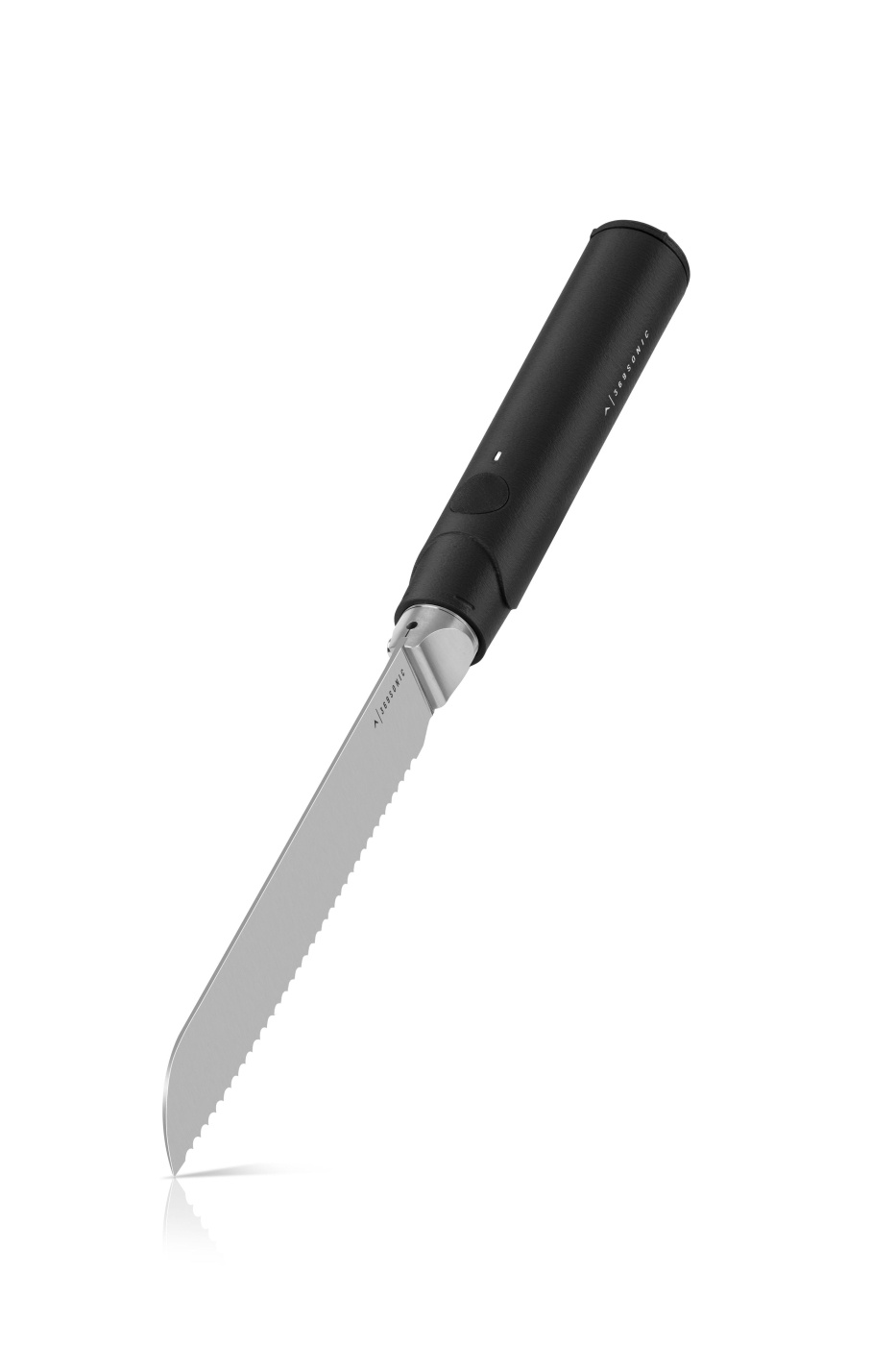
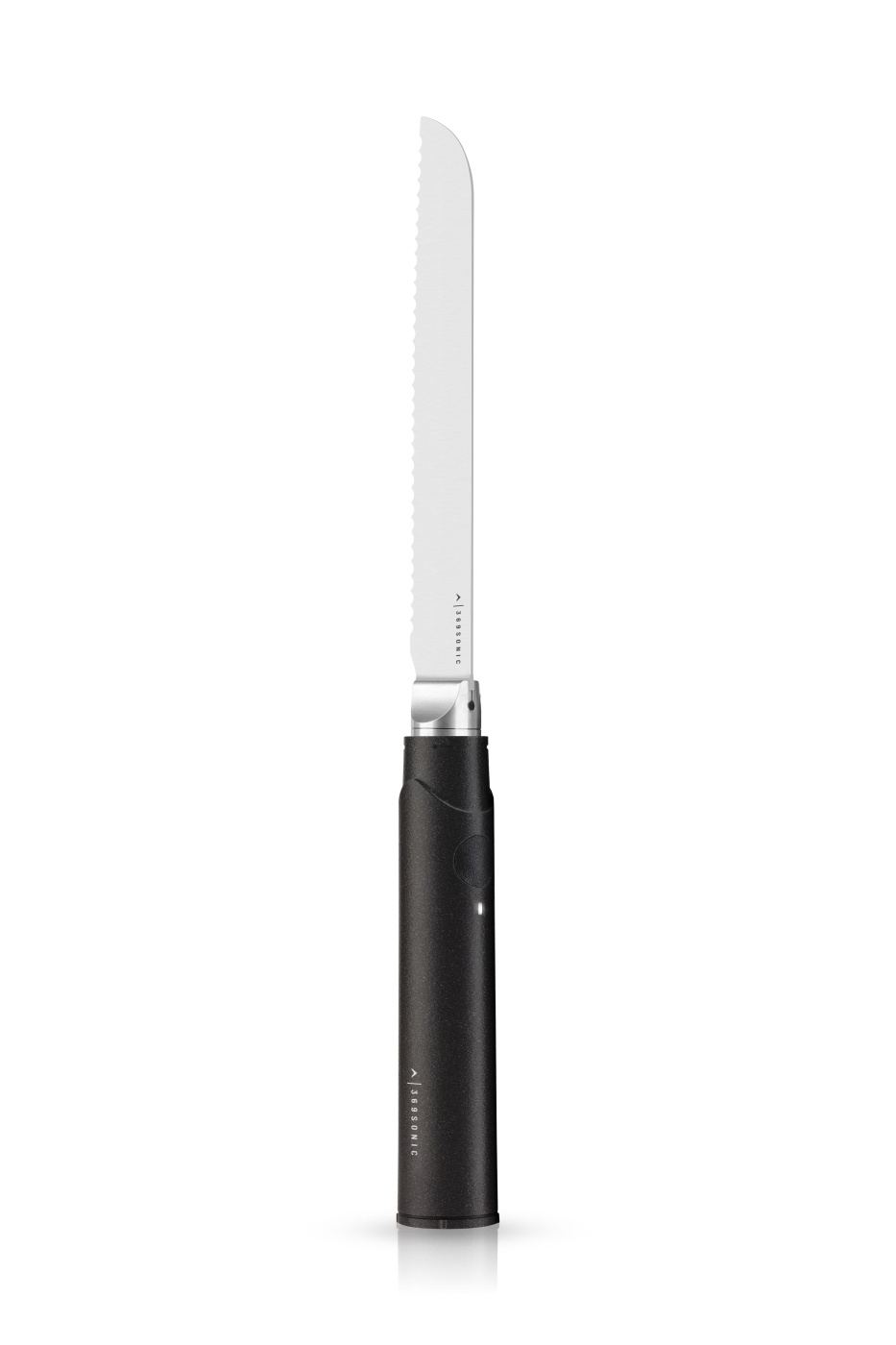
It's also worth mentioning when it isn't used. Day-old hard bread, crisp crispbread, rough chopping tasks. A sharp and well-sharpened regular bread knife handles that perfectly well. The ultrasonic knife has nothing to add in a context that doesn't require precision and it's not built to chop or press. It's a precision specialist for those occasions when the structure of the ingredient is the point, and in those occasions there's nothing else that does the same thing. New Generation 70W is 369Sonic's wireless generation. Everything is in the handle, no cables during work. Charges via adapter. Titanium transducer. Bluetooth connection for frequency monitoring via app. Power: 70W. Frequency range: 25-60 kHz, dynamically controlled by the processor. Weight: 333 g. Made in EU.