







 30 DAYS OPEN PURCHASE
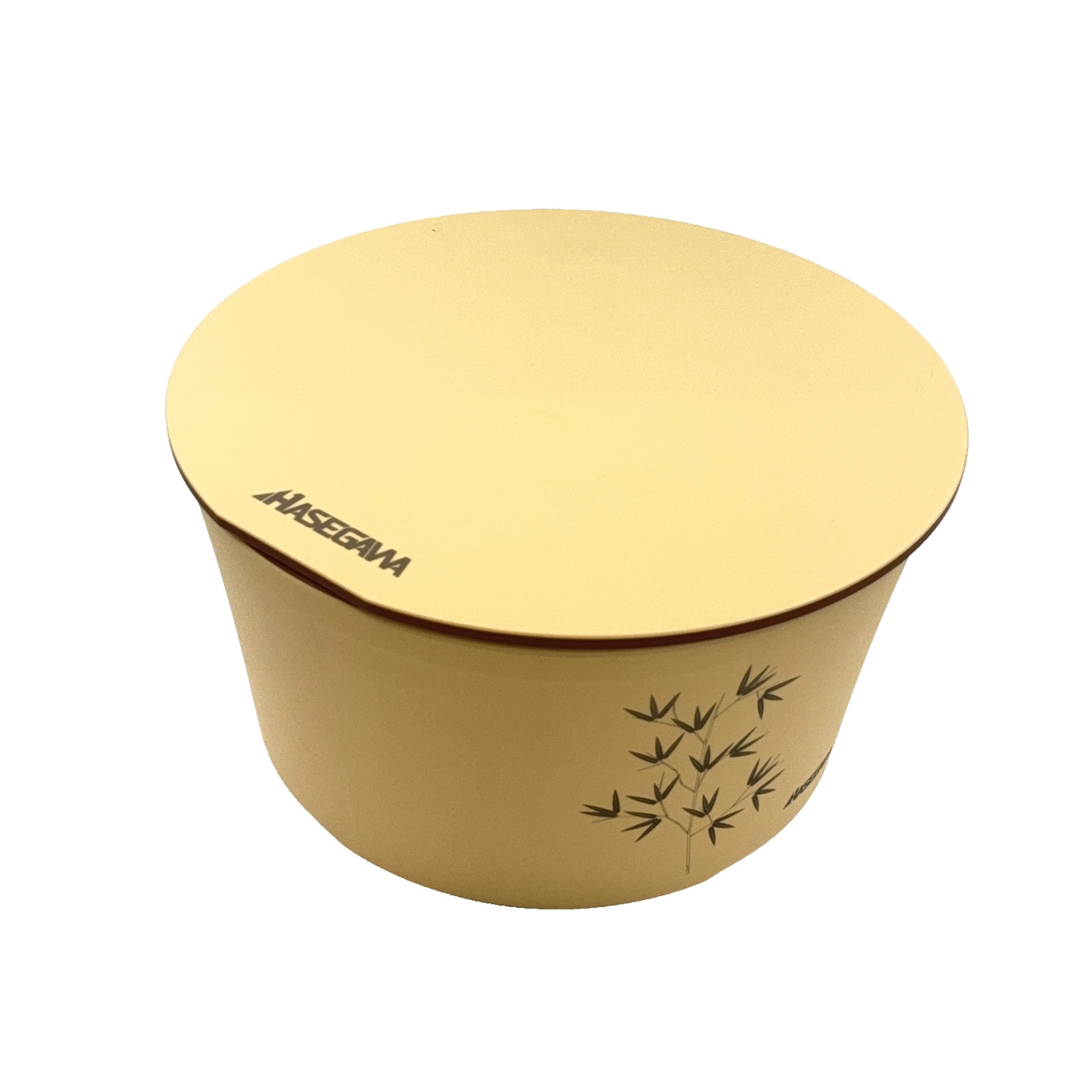
In a sushi kitchen, service is all about timing. The hangiri does its job when the rice is mixed with vinegar and fanned cool. But once the chef starts shaping nigiri, another tool is needed: the ohitsu, the round lidded container that keeps the finished shari at the right temperature and humidity throughout service. Without it, the rice cools too quickly, dries out around the edges and loses its texture. The result shows immediately on the plate.
The traditional ohitsu is made from sawara cypress, a wood that naturally regulates the steam in the rice and helps keep the temperature stable. Hasegawa has taken that property and improved on it: the FHO series has an inner foam layer that retains heat better than wood, as measured in controlled comparisons. The surface is plastic, which means no black mould and no wood splinters coming loose into the rice. It is antibacterial, approved for food contact under EU FCM requirements and Japanese food standards, and weighs a fraction of an equivalent wooden ohitsu. It also withstands cleaning agents without drying out. Made in Japan.
Choose the size according to volume and pace of service. The 30 cm version holds up to 1 sho, approximately 10 Japanese rice measures of 180 ml of uncooked rice, and suits smaller sushi restaurants and small-scale catering. The 33 cm version handles up to 1.5 sho, or 15 rice measures, and is the natural size for a busy restaurant kitchen with continuous service. The 36 cm version is intended for high-turnover kitchens where the ohitsu is refilled during service and the volume calls for a larger container.
The ohitsu is not the first tool that comes to mind when equipping a sushi kitchen. But anyone who has worked a service with rice at the wrong temperature never forgets why it exists.