








 30 DAYS OPEN PURCHASE
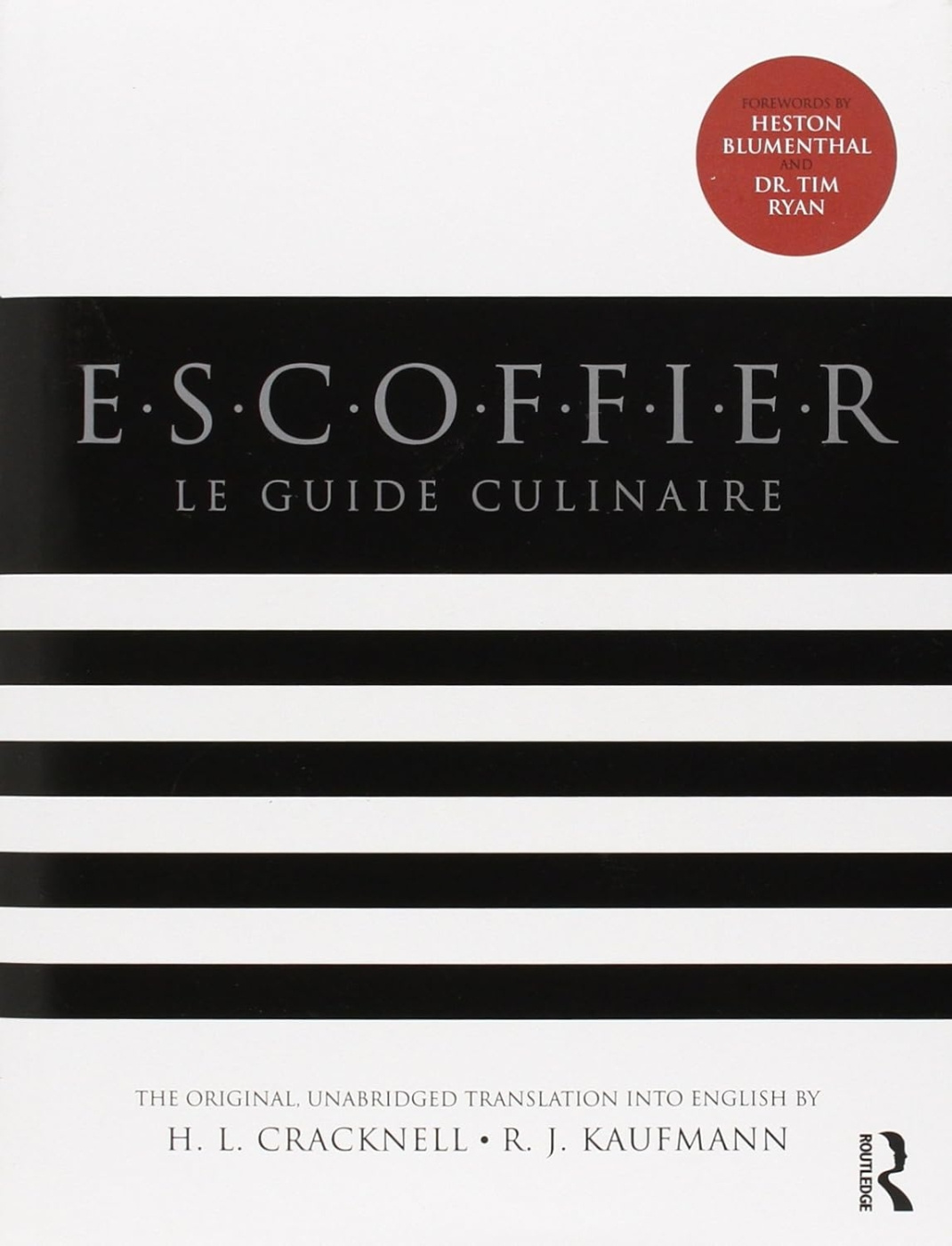
Auguste Escoffier published it in 1903 together with Philéas Gilbert and Émile Fétu. By then, he had already built the kitchens at the Savoy in London, followed by the Carlton and the Ritz together with César Ritz, the restaurant and hotel partnership that shaped the way fine dining establishments are still run today. He was called the king of chefs and the chef of kings, and at the time that was no exaggeration.
Two of his ideas are still used in virtually every professional kitchen in the world. One is the brigade system, the division of the kitchen into stations, each with its own area of responsibility and a clear chain of command, replacing the chaos that had prevailed before. The other is the mother sauces and the systematic thinking behind how everything else is derived from them.
He also simplified things. Where Carême had created architectural showpieces from food, Escoffier stripped away the ornamentation and left the ingredients and technique to speak for themselves. That is why the book still works.
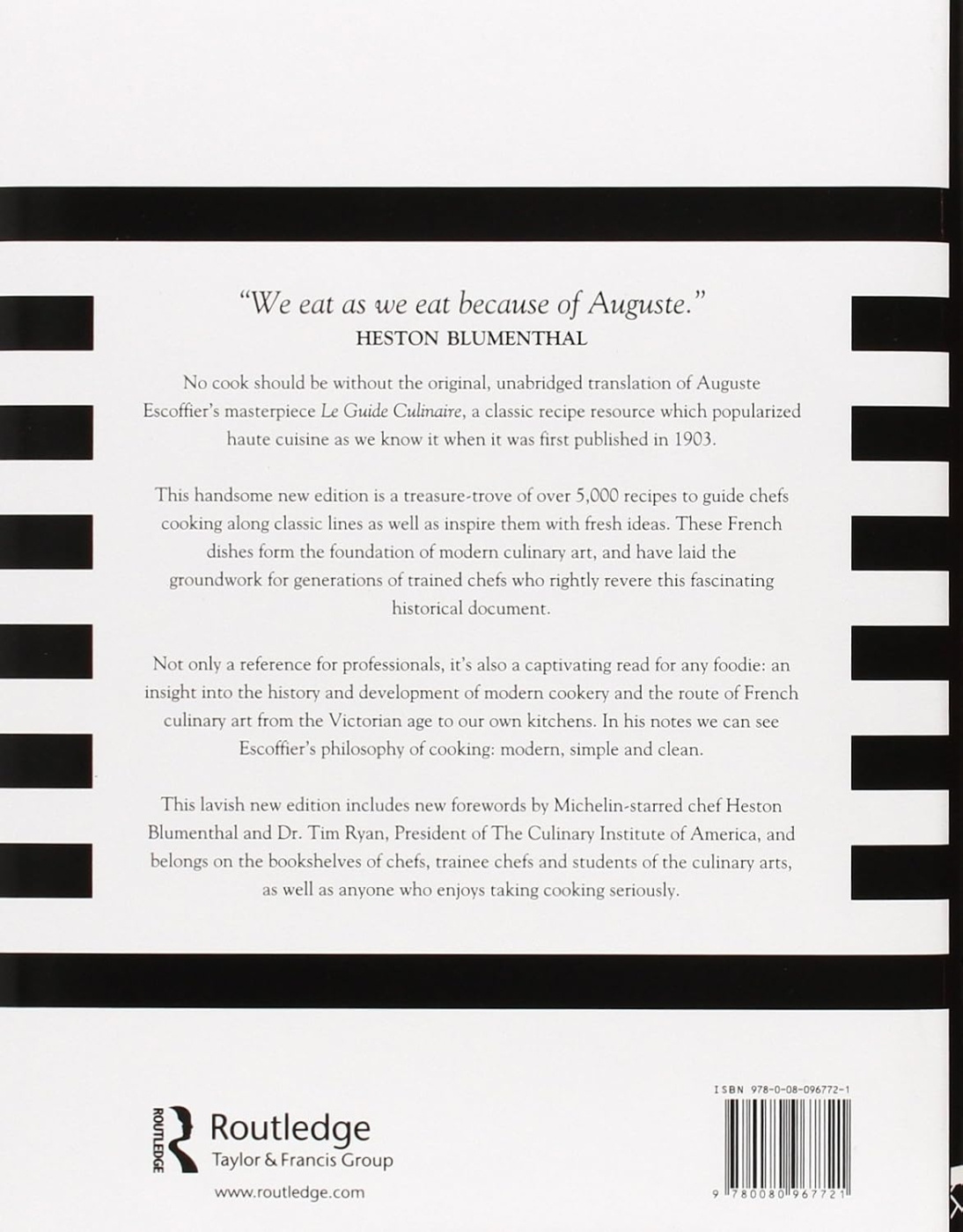
It contains more than 5,000 recipes, arranged as a reference work rather than a cookbook. You do not browse it, you look things up in it. Stocks, mother sauces, garnishes, cooking methods and the terminology still spoken by the profession.
This edition is the complete English professional translation by H.L. Cracknell and R.J. Kaufmann, published by an academic publisher and hardbound to withstand decades on a kitchen shelf. It is an investment you make once in a lifetime, and it will still be there long after the fashionable cookbooks have been replaced.
Number of pages: 638
Format: Hardback
Number of recipes: More than 5,000
Translation: H.L. Cracknell and R.J. Kaufmann
Publisher: Taylor & Francis
ISBN: 9780080967721
Language: English
First published: 1903, this translation: 2011
The Kitchen Lab Selection
If this shelf has a foundation, this book is it. Everything else stands in some relation to it, including the books that do the exact opposite of what it says. Granted, it is a lot of money for a book almost nobody reads from cover to cover, but there is a point to keeping it within reach. It is a reminder that almost everything we take for granted in a kitchen is someone's decision, made at some point by a person who had their reasons. If you work professionally, this is not a present to yourself but basic equipment.