








 30 DAYS OPEN PURCHASE
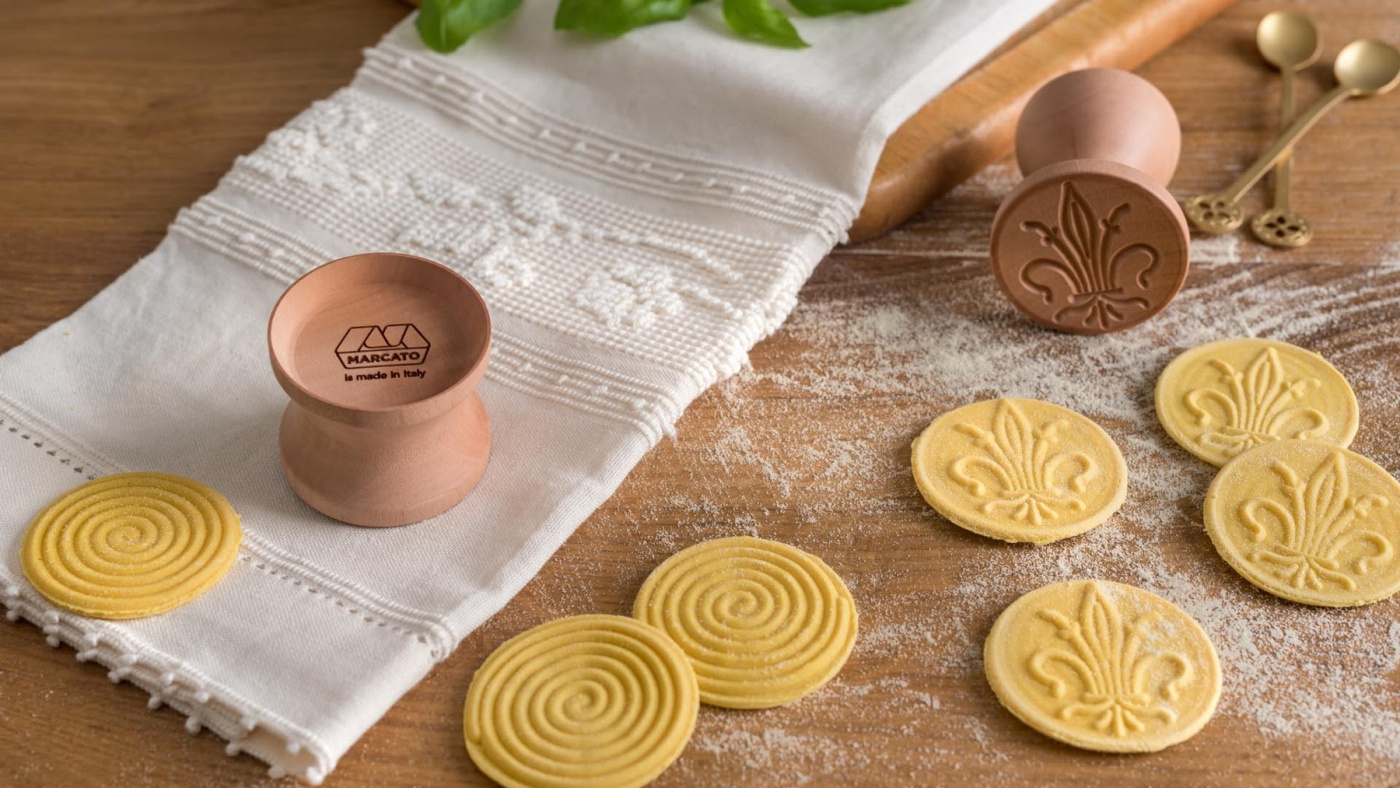
In Liguria, the coastal region around Genoa, people have been making a pasta that looks like coins for hundreds of years. It's called corzetti, after the corzetto, a small coin that circulated in Genoa in the 14th century. The pasta is flat and round, rather like a thin biscuit, with a pattern embossed on both sides. Noble families once had their coats of arms carved into the stamps and served their guests pasta bearing the family emblem, which must have been the most edible bragging of all time. The farmers made do with a cross, a flower or a star.
The pattern isn't just for show. The tiny grooves catch the sauce, which is why corzetti are traditionally served with something meant to cling: walnut sauce, pesto, a pine nut sauce or a mushroom ragù.
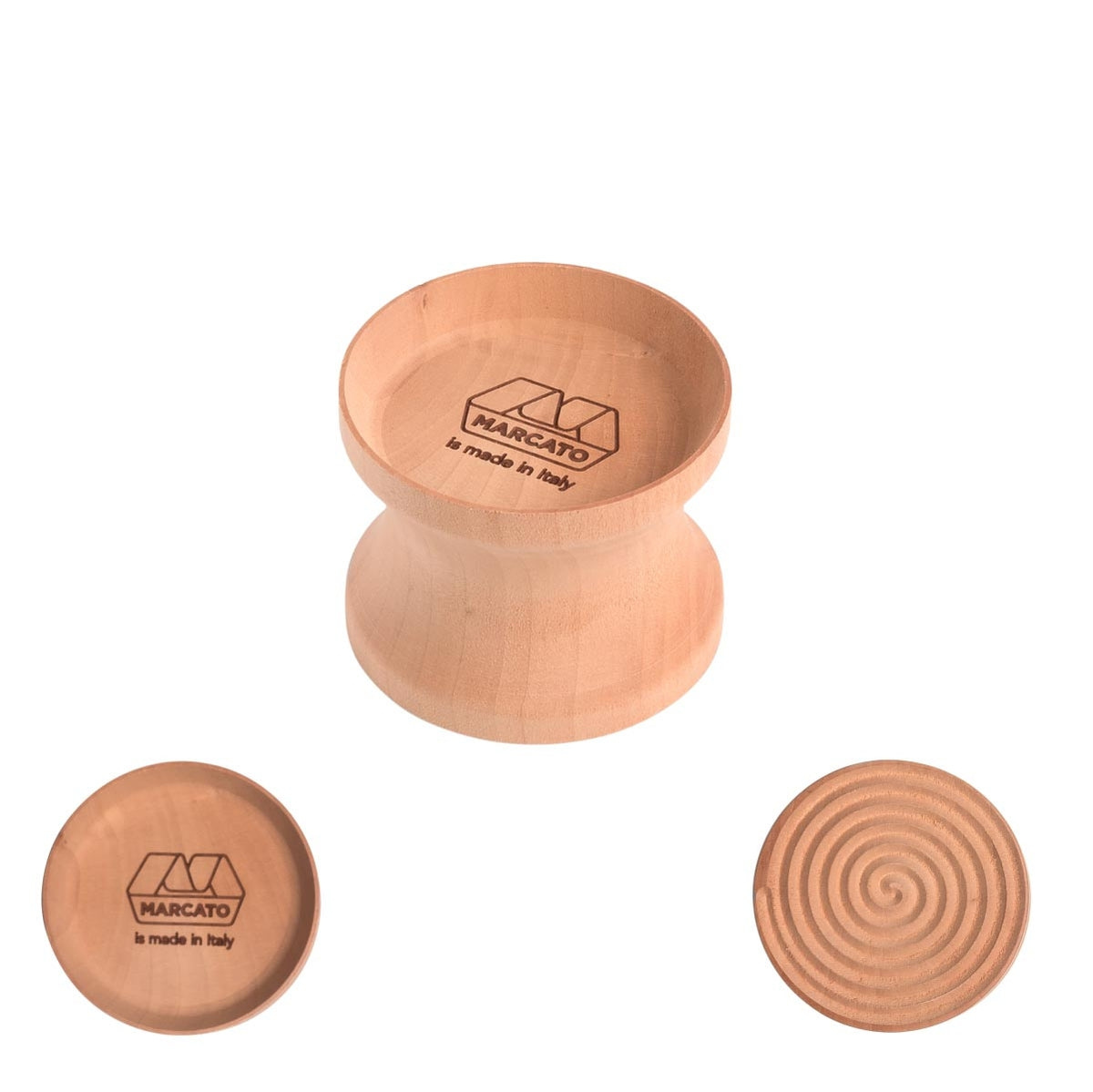
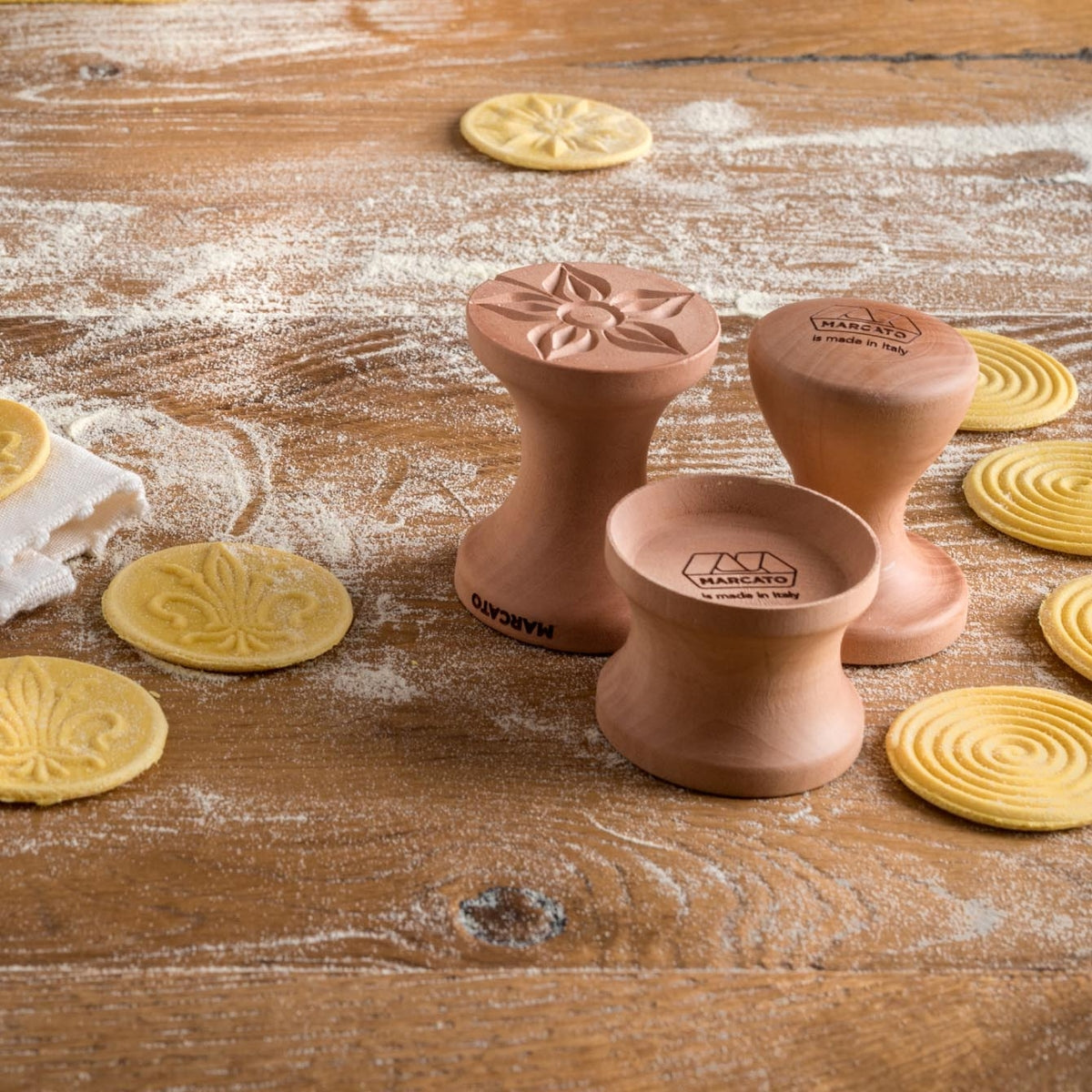
To make corzetti you need a corzetti stamp, and it consists of two parts. The base has a hollow side that works as a cutter, punching round pieces out of the rolled dough, and a patterned side on which the piece of pasta is placed. Then you take the upper stamp, press it onto the pasta and emboss the pattern on both sides at once. It takes a few tries to get the pressure right, and after that it goes quickly.
Marcato sells the parts separately, so you can choose the patterns you like. The base has a classic spiral on its patterned side and is needed to cut out the pasta. The single stamp has a lily, giglio in Italian. The double stamp has two different patterns, a sun and a flower, one at each end, so you can switch between them. Combine the base with one or both stamps and you have everything you need.
The stamps are made of solid wood and made in Italy. Wipe them with a dry cloth or brush after use. They should not be washed with water and are not dishwasher safe.